
|
| You might also like: | Sea Cucumber Printout | Echinoderm Printouts | Sea Urchin | Sand Dollar Printout | Brittle Star | Today's featured page: Drawing and Adding Fractions, Printable Worksheets |
| Echinoderm Printouts | EnchantedLearning.com Sea Stars |
Animal Printouts Label Me! Printouts |
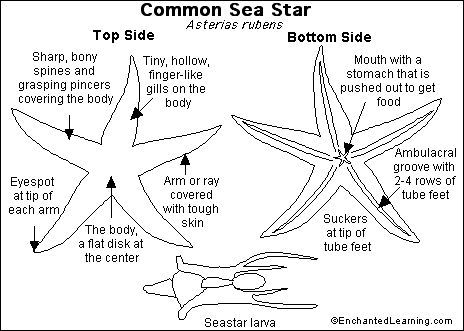
Reproduction: Most species of starfish expel enormous numbers of eggs and sperm into the ocean; fertilization is external. After fertilization, the tiny, transparent, bilaterally-symmetrical larvae (baby sea stars) travel many miles as they are swept along by ocean currents for about two months. As they develop, the tiny larvae swim in the sea, eat phytoplankton, and are a component of zooplankton.
Diet: Sea stars are carnivores (meat-eaters). They eat clams, oysters, coral, fish, and other animals. They push their stomach out through their mouth (located on the underside of the sea star) and digest the prey.
Anatomy: Most sea stars have five arms (or a multiple of five) that radiate from a central disk. Sea stars do not have a brain; they have a simple ring of nerve cells that moves information around the body. Eyespots (primitive light sensors) are at the tip of each arm. If a sea star's arm is cut off, it will regenerate (regrow).
Classification: Kingdom Animalia (animals), Phylum Echinodermata (echinoderms), Class Asteroidea (sea stars), about 2,000 species.
| Search the Enchanted Learning website for: |