
|
| You might also like: | Pronghorn Printout | Karakul Sheep Printout | Pekingese Printout | Shrew Printout | Massospondylus Fact Sheet | Today's featured page: 'Draw Colorful Circles' Book |
| EnchantedLearning.com More Mammal Printouts |
EnchantedLearning.com Pika or Cony |
Animal Printouts Label Me! Printouts |
These territorial animals mark their range with scent from cheek glands. Pikas are diurnal, they are most active during the day. Pikas are social mammals, living in colonies or families. Desert- and grassland-dwelling pikas live in burrows; mountain-dwelling pikas live in rock crevices. Pikas live for about 3 years in captivity.
Diet: Pikas are herbivores (plant-eaters). They eat grasses, herbs, leaves, bark, and twigs. Pikas do not hibernate over winter. They stockpile huge amounts of food in a giant pile, which they will need when food is scarce in winter.
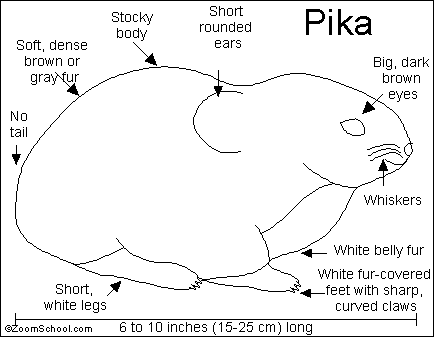
Anatomy: Pikas are about 6 to 10 inches (15-25 cm) long and weigh 6 to 14 ounces (170-400 g). They have big ears and good hearing. The fur is soft; it is gray-brown on top and white on the belly.
Predators: These small animals are hunted by ermines, foxes, hawks, eagles, weasels, bears, and martens.
Classification: Kingdom Animalia (animals), Phylum Chordata (having a notochord), Class Mammalia (mammals), Order Lagomorpha (rabbits, hares, and pikas), Family Ochotonidae (pikas).
| Search the Enchanted Learning website for: |