
|
| You might also like: | Megaraptor | Gallimimus | Dinosaur Information Sheets: M | Dinosaur Information Sheets: H-L | Dinosaur Information Sheets: D-G | Today's featured page: Plant Theme Pages Theme Pages: K-3 Themes |
 |
ZoomDinosaurs.com ALL ABOUT DINOSAURS! |
 |
| What is a Dinosaur? | Dino Info Pages | Dinosaur Coloring Print-outs | Name That Dino | Biggest, Smallest, Oldest,... | Evolution of Dinosaurs | Dinos and Birds | Dino Myths |
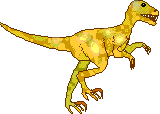 Utahraptor was a large, terrifying mid-Cretaceous predator with 9-15 inch long middle-toe claws. It was a lightly built, fast-moving, agile, bipedal (walked on two legs), bird-like dinosaur. It had a curved, flexible neck and a big head. Sharp, serrated teeth were set into very powerful jaws. Each of its three fingers on each arm had large, sharp, curved claw.
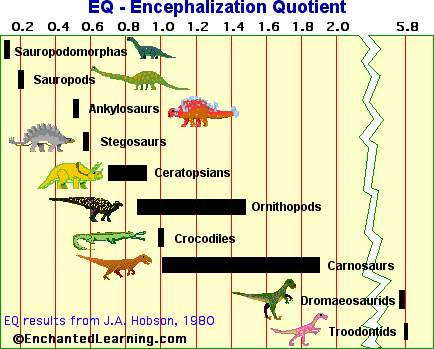
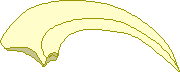 It had four-toed feet; the second toe had a 9-15 inch (23-38 cm) sickle-like claw and the other toes had smaller claws. Its long tail had bony rods running along the spine giving it rigidity; the tail was used for balance and fast turning ability. It had a relatively large brain and large, keen, eyes. Utahraptor was 16-23 feet (5-7 m) long and may have weighed about 1 ton.
 Utahraptor walked on two slender, bird-like legs; it must have been a fast runner, considering its legs and light weight. When it ran, it rotated its huge middle-toe-claw upwards and ran on the other toes.
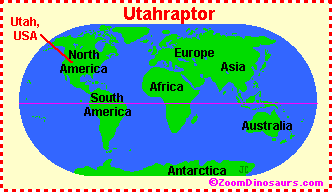 Utahraptor was first found in eastern Utah (in the western United States) in 1991. It was named by paleontologists James Ian Kirkland, Robert Gaston and Donald Burge in 1993.
 (and Other Prehistoric Creatures) |
Enchanted Learning®
Over 35,000 Web Pages
Sample Pages for Prospective Subscribers, or click below
|
Overview of Site What's New Enchanted Learning Home Monthly Activity Calendar Books to Print Site Index K-3 Crafts K-3 Themes Little Explorers Picture dictionary PreK/K Activities Rebus Rhymes Stories Writing Cloze Activities Essay Topics Newspaper Writing Activities Parts of Speech Fiction The Test of Time
|
Biology Animal Printouts Biology Label Printouts Biomes Birds Butterflies Dinosaurs Food Chain Human Anatomy Mammals Plants Rainforests Sharks Whales Physical Sciences: K-12 Astronomy The Earth Geology Hurricanes Landforms Oceans Tsunami Volcano |
Languages Dutch French German Italian Japanese (Romaji) Portuguese Spanish Swedish Geography/History Explorers Flags Geography Inventors US History Other Topics Art and Artists Calendars College Finder Crafts Graphic Organizers Label Me! Printouts Math Music Word Wheels |
Click to read our Privacy Policy
| Search the Enchanted Learning website for: |